

What Plywood To Use For Furniture?
Choosing plywood for furniture is less about picking the thickest panel and more about matching the board structure to how the furniture will be used. The right plywood improves screw holding, keeps doors and drawers aligned, reduces warping, and gives you a cleaner surface for paint, veneer, or laminate. The wrong plywood can lead to edge chipping, visible core gaps, weak fasteners, and long-term deformation in humid rooms.
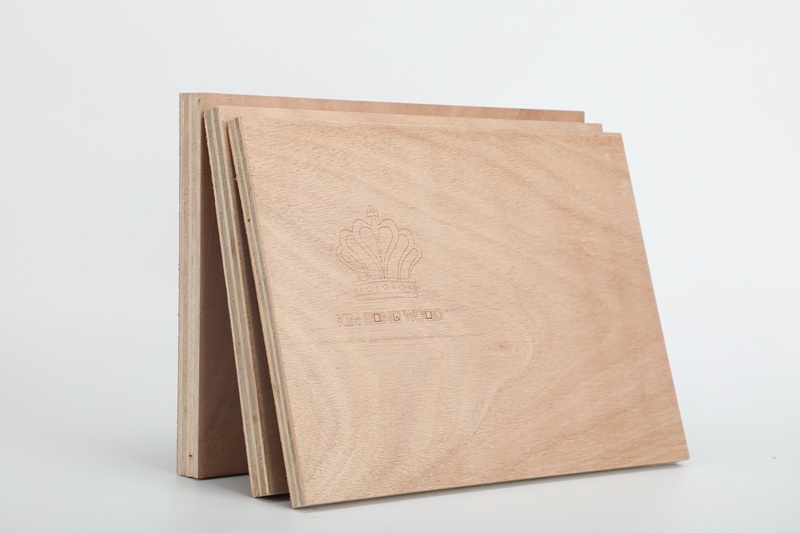
KIM BONG WOOD supplies panel solutions for furniture manufacturing. You can review our multi-layer furniture board options for stable, repeatable production needs.
Start With The Furniture Application
Before you compare grades, define the job the panel must do. Different furniture parts stress the board in different ways.
Cabinet carcasses and shelves need stiffness and consistent thickness to prevent sagging.
Doors and large side panels need dimensional stability to reduce bowing and twisting.
Drawer boxes need good screw holding and clean edges for joinery.
Tabletops and work surfaces need a uniform face, strong core, and stable flatness.
Bathroom and kitchen furniture needs moisture resistance and reliable bonding performance.
Once the application is clear, you can choose the correct plywood type, thickness, and face grade without overbuying.
Understand Plywood Types Used In Furniture
Furniture producers typically select from a few panel families:
Hardwood plywood: usually a stronger, more stable choice for furniture frames, cabinets, and visible panels when paired with a good face veneer.
Softwood plywood: often used for structural or cost-driven applications; it can work for furniture but may show more voids and a rougher core.
Birch plywood: popular for cabinetry and modern furniture because the core is often uniform and edges can look clean when finished.
Poplar core plywood: valued for lighter weight and easier machining, often used under decorative surfaces.
Multi-layer Furniture Board: built for furniture production where consistency, flatness, and machining performance matter across large volumes.
If your goal is predictable results in manufacturing, prioritize panels that behave consistently across batches rather than panels that look acceptable only on the surface.
Core Quality Matters More Than The Face In Many Projects
The core determines how the board performs under load and how it holds fasteners. In furniture, the most common failures come from hidden core problems, not from the outer veneer.
Core features to evaluate:
Void control: fewer gaps reduce weak points and improve edge machining.
Layer uniformity: more consistent plies generally improve stability and reduce local soft spots.
Bonding quality: stable glue lines reduce delamination risk during machining and long-term use.
Density balance: supports screw holding and reduces crushing around hardware.
A true furniture grade plywood selection process always includes core inspection, not only face appearance.
Face Grade Selection For Visible Surfaces
Face grade affects finishing time and the look of painted or veneered furniture. If you plan to apply a decorative veneer, laminate, or melamine, you still need a flat and defect-controlled face to prevent telegraphing.
Practical guidance:
Choose a higher face grade for doors, end panels, and tabletops.
A standard face grade can work for internal carcass parts that will not be seen.
For paint finishes, prioritize a smooth, patch-controlled face to reduce sanding and rework.
Thickness Choice Based On Furniture Parts
Thickness is not one-size-fits-all. Over-thick panels add weight and cost without improving performance for every component.
| Furniture Part | Common Thickness Range | Why It Works |
|---|---|---|
| Cabinet sides and bottoms | 15–18 mm | balances stiffness and weight |
| Adjustable shelves | 18 mm or higher | reduces sagging under load |
| Drawer components | 12–15 mm | improves joinery and hardware fit |
| Large doors and tall panels | 18–21 mm | reduces bowing and improves flatness |
| Backs and lightweight panels | 5–9 mm | suitable when properly supported |
Thickness should be chosen together with core structure and span length. A better core often outperforms a thicker but inconsistent board.
Moisture Resistance And Indoor Environment
Furniture plywood is often installed in environments where humidity changes. Moisture exposure does not only come from water splashes; it also comes from seasonal humidity and indoor condensation.
If your furniture will be used in kitchens, bathrooms, laundry rooms, or coastal climates:
Choose panels built for better moisture tolerance and stable bonding.
Use proper edge sealing in production, especially on cut edges and hardware holes.
Combine correct board selection with correct surface finishing, because coatings and laminates protect the panel over time.
Machining Performance For Production Efficiency
In furniture production, the board must cut cleanly, route without tearing, and accept drilling patterns reliably. Poor machining behavior slows production and increases scrap.
Indicators of good machining performance:
Clean edge after sawing with minimal chip-out
Stable thickness for CNC tool paths
Good screw holding without stripping
Reduced risk of delamination at corners and narrow strips
For factories and project buyers planning consistent output, selecting a stable multi-layer panel is often a better strategy than chasing the lowest material cost.
What To Ask Your Supplier Before You Commit
When sourcing plywood at scale, a few questions help prevent downstream issues:
Is the core controlled for voids and consistent ply structure?
What thickness tolerance can be maintained across production batches?
How does the board perform in CNC routing and edge finishing?
What moisture-resistance options are available for humid applications?
Can the supplier support long-term supply consistency for bulk orders?
These questions align material choice with real production risks: rework, warping complaints, and hardware failures.
Where KIM BONG WOOD Fits In
KIM BONG WOOD focuses on panel solutions designed for furniture manufacturing and stable processing. If you are evaluating a board that balances flatness, core consistency, and machining efficiency, explore our multi-layer furniture board range to compare specifications and application fit.
Conclusion
The best plywood to use for furniture depends on the part you are building and the performance you need over time. Prioritize core quality, ply uniformity, bonding stability, and machining behavior first, then choose the face grade and thickness that match your design and finish. When you select furniture grade plywood based on real use conditions, you reduce warping, improve hardware reliability, and achieve more consistent production results.
If you want help choosing the right panel structure for your furniture line, material stack, or production process, contact KIM BONG WOOD through our multi-layer furniture board page. Share your application, target thickness, surface finish plan, and environment requirements, and we can recommend a practical specification for your project.