

What Is A Fireproof Board?
In modern architecture and interior design, fire safety has become a top priority alongside aesthetics and sustainability. One of the most effective materials contributing to safer building construction is the fireproof board. These boards are engineered to resist high temperatures, delay combustion, and prevent fire spread, all while offering structural stability and decorative flexibility. But what exactly is a fireproof board, and why has it become essential in today’s construction and furniture industries? This article explains its composition, features, types, and applications, and introduces how KIM BONG WOOD’s formaldehyde-free fireproof boards combine fire resistance with environmental health and design innovation.
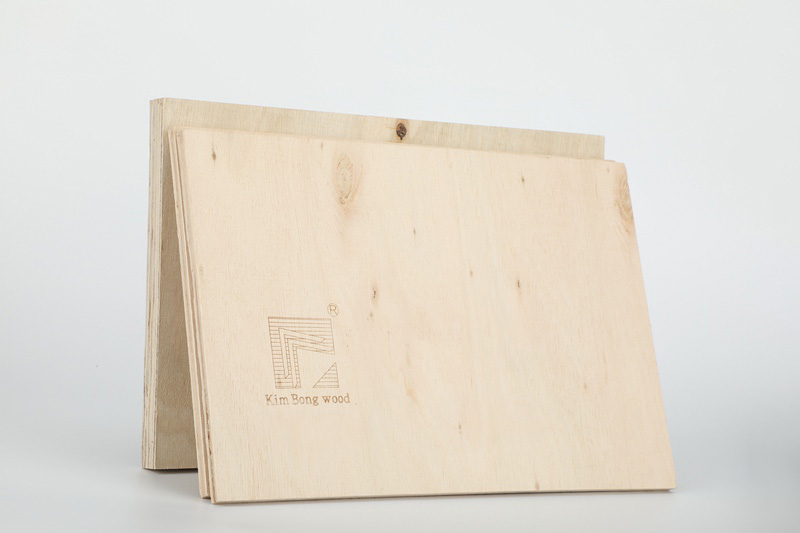
1. Definition and Material Composition of Fireproof Boards
A fireproof board is a type of non-combustible or fire-retardant building material designed to withstand high temperatures and prevent flames from spreading. Unlike ordinary plywood or particleboard, which ignite easily, fireproof boards maintain their integrity even when exposed to direct heat or flame. Their performance depends on the material composition, which usually includes inorganic minerals, fiber reinforcements, and eco-friendly binding agents.
1. Core Composition
The main materials used in fireproof boards include:
Magnesium oxide (MgO) or calcium silicate, known for their excellent fire-resistance and thermal stability.
Glass fiber or cellulose fiber, which enhances tensile strength and prevents cracking.
Vermiculite or perlite, lightweight minerals that provide insulation and reduce heat transfer.
Inorganic fillers and binders, which give the board rigidity and durability.
These materials are mixed, pressed, and cured at high temperatures to create dense, uniform panels that can resist ignition and retain structural integrity.
2. Fire Rating Standards
Fireproof boards are tested and graded according to international fire-resistance standards. Common classifications include:
A1 Grade: Non-combustible; does not ignite or produce toxic gases.
A2 Grade: Minimal combustibility; may slightly char but does not sustain fire.
B Grade: Fire-retardant; delays burning but not completely fireproof.
KIM BONG WOOD produces A1 and A2-grade formaldehyde-free boards, ensuring that every product meets both fire safety and environmental standards. These boards are ideal for public buildings, residential interiors, and furniture applications where both safety and health are essential.
2. Manufacturing Process and Structural Features
The production of a fireproof board involves a combination of thermal compression, chemical bonding, and fiber reinforcement. Each stage of manufacturing enhances its heat resistance, stability, and smooth surface quality.
1. Material Mixing
The core components—magnesium oxide, fibers, and fillers—are precisely mixed in specific ratios. Additives such as flame retardants and moisture stabilizers are incorporated to enhance overall performance.
2. Forming and Pressing
The blended slurry is evenly distributed on a forming line, where it is compressed under high pressure to remove air pockets and ensure uniform density. During this stage, reinforcing mesh (like fiberglass cloth) is embedded between layers to increase structural strength.
3. Curing and Drying
Once formed, the board is cured in a controlled environment. This process strengthens chemical bonds between materials, giving the board its fire-resistant and moisture-proof characteristics.
4. Surface Treatment
Depending on application needs, the surface can be left natural, laminated with decorative films, or coated with UV-cured finishes for aesthetic appeal and additional protection.
| Manufacturing Stage | Purpose | Result |
|---|---|---|
| Material Mixing | Combine raw components | Creates uniform base mixture |
| Pressing | Compact materials under pressure | Ensures density and strength |
| Curing | Activate chemical bonds | Achieves fire resistance |
| Finishing | Apply coatings or laminates | Adds appearance and durability |
KIM BONG WOOD’s advanced production line integrates automated mixing and hot-press lamination, ensuring consistency in density and surface quality. The result is a formaldehyde-free, non-toxic board that performs excellently in both construction and interior furniture manufacturing.
3. Characteristics and Performance Advantages
The popularity of fireproof boards comes from their ability to combine safety, durability, and environmental sustainability—qualities that are essential in modern building materials. Below are the most notable performance characteristics:
1. Excellent Fire Resistance
The inorganic composition of fireproof boards prevents ignition even under extreme heat. When exposed to flames, the material does not melt or produce toxic fumes, offering valuable time for evacuation and minimizing fire damage. Tests show that A1-grade boards can resist temperatures above 1000°C without deformation.
2. Moisture and Corrosion Resistance
In addition to fire protection, fireproof boards are resistant to moisture, mold, and oxidation. This makes them suitable for humid or coastal regions where traditional wooden materials degrade quickly.
3. Dimensional Stability
The board’s reinforced structure prevents warping or expansion when exposed to temperature fluctuations. It retains its original size and strength for years, reducing maintenance and replacement costs.
4. High Strength-to-Weight Ratio
Despite their density, fireproof boards are relatively lightweight compared to concrete panels. Their compressive and bending strength makes them easy to cut, drill, or install without specialized equipment.
5. Eco-Friendly and Non-Toxic
Unlike conventional boards that rely on formaldehyde-based adhesives, KIM BONG WOOD’s fireproof boards are formaldehyde-free, eliminating harmful off-gassing and ensuring safe indoor air quality. The materials are recyclable and free from asbestos or heavy metals.
| Property | Fireproof Board | Ordinary plywood | Gypsum Board |
|---|---|---|---|
| Fire Resistance | Excellent | Poor | Moderate |
| Moisture Resistance | Excellent | Poor | Moderate |
| Durability | 15–20 years | 5–8 years | 8–10 years |
| Eco-Friendliness | Formaldehyde-Free | Contains VOCs | Safe but fragile |
| Weight | Medium | Light | Medium |
By integrating safety and sustainability, KIM BONG WOOD’s boards are not only protective but also environmentally responsible—ideal for spaces that prioritize health and longevity.
4. Common Applications of Fireproof Boards
Thanks to their versatility and superior properties, fireproof boards are used in a wide range of settings, from large commercial projects to residential interior design.
1. Wall and Ceiling Cladding
Fireproof boards are widely used as wall panels and ceiling linings in commercial buildings, schools, hospitals, and public spaces. Their non-combustible nature ensures compliance with fire safety regulations while offering a smooth, paintable surface for design customization.
2. Furniture Manufacturing
In modern furniture production, fire-retardant and formaldehyde-free boards are preferred for kitchen cabinets, wardrobes, office tables, and partition systems. KIM BONG WOOD combines PET or melamine surfaces with fireproof cores, achieving a sleek finish that’s resistant to both fire and moisture.
3. Fire Doors and Safety Barriers
High-density fireproof boards are used to construct fire doors, ducts, and partition walls in industrial and public facilities. These components are engineered to prevent flame penetration and maintain structural integrity during emergencies.
4. Exterior and Industrial Use
Specially coated fireproof boards can be applied to facades, HVAC enclosures, and electrical control panels, providing both insulation and flame protection.
5. Public and Transport Infrastructure
In rail stations, airports, tunnels, and marine interiors, fireproof materials ensure compliance with strict safety regulations while reducing maintenance needs.
KIM BONG WOOD offers customizable fireproof boards that adapt to various applications, combining fire safety with modern design requirements. Clients can choose from matte, gloss, and textured finishes depending on project needs.
5. The Role of Fireproof Boards in Sustainable Building
As the global construction industry shifts toward green and safe building practices, fireproof boards play a critical role in achieving sustainability goals. They not only enhance safety but also contribute to energy efficiency and environmental responsibility.
1. Fire Safety Meets Environmental Health
Conventional fireproof materials once relied on harmful chemicals such as asbestos or halogen-based retardants. Modern formaldehyde-free fireproof boards, like those from KIM BONG WOOD, achieve the same level of protection through eco-safe mineral compositions, ensuring both safety and sustainability.
2. Reduced Carbon Footprint
The manufacturing process for fireproof boards consumes less energy than producing cement-based or metal-clad panels. Lightweight construction also reduces transportation emissions, aligning with eco-friendly building standards such as LEED and BREEAM.
3. Longevity and Recyclability
Durable fireproof boards have long lifespans—often over 20 years—reducing the need for frequent replacements. At the end of their service life, they can be recycled or repurposed, minimizing landfill waste.
4. Energy Efficiency
Due to their excellent insulation properties, fireproof boards help maintain indoor temperature stability, reducing the reliance on heating or air conditioning. This makes them not just a safety feature but also an energy-saving material.
KIM BONG WOOD emphasizes these principles in its product development, ensuring that every board supports sustainable architecture, healthy interiors, and long-term safety performance. The company’s dedication to eco-materials helps clients meet modern building codes while protecting both occupants and the environment.
Conclusion
A fireproof board is far more than a construction material—it is a key element in creating safe, sustainable, and high-performance buildings. Made from inorganic compounds and reinforced fibers, these boards offer exceptional resistance to fire, moisture, and deformation while remaining lightweight and easy to install.
KIM BONG WOOD’s formaldehyde-free fireproof boards embody this balance of innovation and responsibility. With superior fire ratings, environmental certifications, and refined surface finishes, they serve as ideal materials for everything from interior furniture to large-scale architectural projects.
By choosing fireproof boards from KIM BONG WOOD, architects and builders gain not only peace of mind but also the assurance of healthier, safer, and more sustainable living environments—a true reflection of modern material engineering meeting the demands of tomorrow’s world.
Previous: How Does Fire Retardant Plywood Work?
Next: What Are PET Boards?