

How Many OSB Boards Do I Need?
Estimating the number of OSB Boards required for a project is an essential step in construction planning. Whether you are sheathing exterior walls, creating a subfloor, building roof decking, or preparing a multi-room renovation, the accuracy of your material calculation determines the efficiency and cost of the entire project. OSB panels are standardized in size, which makes the estimation process straightforward once the area and installation conditions are clearly measured. Selecting high-quality panels such as KIM BONG WOOD OSB Board ensures consistency and structural reliability, helping you achieve predictable results through every stage of construction.
Understanding OSB Panel Sizes and Coverage
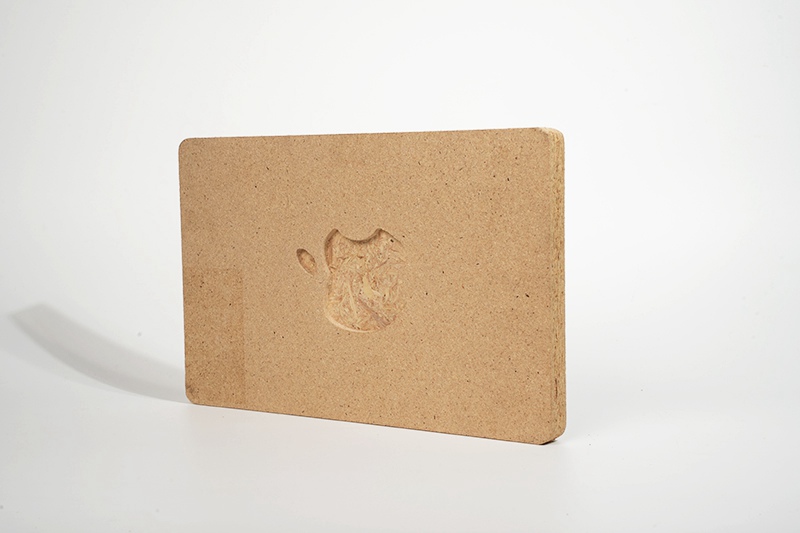
osb boards are primarily manufactured in a standard size of 4 ft by 8 ft, which provides a total surface coverage of 32 square feet. Some variations include 4 × 9 ft or 4 × 10 ft formats, but the majority of residential and commercial applications still rely on the 4 × 8 ft standard. Since the panels are produced with precise dimensions, the calculation process uses uniform values across all applications.
This standardization benefits both builders and suppliers. It also means that, when purchasing OSB from manufacturers like KIM BONG WOOD, you can expect minimal deviation in size, allowing easier layout planning and smoother installation.
Measuring the Total Area for Coverage
The first step of the estimation process is to measure the full surface area that will be covered. Different applications require different methods of measurement, but the principle remains consistent: calculate the square footage and assess how the OSB will be oriented across the structure.
Wall coverage
Measure wall height and wall width separately. Multiply the two values for each wall, then subtract the area of openings such as windows and doors. Add all remaining areas to determine your wall sheathing requirement.
Floor or roof coverage
Measure the length and width of the surface. Multiply them to get the total area. Multi-section structures should be broken into smaller segments, with the areas added together for a final total.
Accurate measurements prevent shortages and reduce the risk of overbuying, which is especially important when working within a fixed budget.
Converting Surface Area to osb board Quantity
Once the total surface area is known, the conversion to OSB board count becomes simple. Because each standard sheet covers 32 square feet, you only need to divide the total required area by 32.
Example: Project area: 512 square feet
Coverage per board: 32 square feet
Calculation: 512 divided by 32 equals 16 boards
Always round up to ensure full coverage. Even minimal miscalculations can disrupt installation flow, especially in large projects.
Adding Waste Allowance to the Calculation
No construction project uses OSB panels with perfect efficiency. Panels must be trimmed to fit openings, corners, uneven boundaries, and specific framing requirements. For this reason, a waste factor is added to the calculation to ensure enough material is available on site.
Typical waste percentages:
Mildly complex layouts: 5 percent
Standard roof or wall layouts: 10 percent
Highly irregular designs: 15 percent or more
Adding this percentage ensures you do not fall short during installation. Below is a reference showing how the waste factor influences the final quantity:
| Base Panels Needed | Waste Percentage | Additional Panels | Final Quantity |
|---|---|---|---|
| 15 panels | 5 percent | 1 | 16 |
| 20 panels | 10 percent | 2 | 22 |
| 30 panels | 15 percent | 5 | 35 |
High-precision OSB such as KIM BONG WOOD OSB Board reduces waste during cutting thanks to consistent thickness and dimensional stability.
Application-Based OSB Quantity Considerations
Different building areas require different panel orientations, structural capacities, and layout strategies. These factors influence how many sheets are ultimately needed.
Walls
Walls often include openings that reduce the total coverage area, but the layout can cause additional cuts. If the ceiling height exceeds 8 ft, two rows of panels will be required, increasing the total number.
Floors
Subfloor installations typically involve uniform rectangular shapes, allowing efficient material usage. However, joist spacing may require specific panel orientation, influencing how offcuts can be reused.
Roofs
Roof structures are more complex due to angles, ridges, and overhangs. Valleys and hips produce additional cut sections, often raising the waste factor.
Example: Room Calculation From Start to Finish
To demonstrate the process clearly, consider the example of a single-room installation:
Room floor area: 14 ft by 12 ft
Wall area after subtracting openings: 420 square feet
Total area: 588 square feet
Convert to OSB panels: 588 square feet divided by 32 equals 18.375
Rounded up: 19 panels
Add 10 percent waste: 19 multiplied by 1.10 equals 20.9
Rounded up: 21 panels required
This method can be applied to any project scale, from small repairs to full building construction.
Quick Reference Table for Common Building Sizes
| Surface Area (sq ft) | Estimated Panels Needed | Panels With 10% Waste |
|---|---|---|
| 160 | 5 | 6 |
| 320 | 10 | 11 |
| 480 | 15 | 17 |
| 640 | 20 | 22 |
| 960 | 30 | 33 |
| 1280 | 40 | 44 |
These values are approximate but provide an efficient starting point for material planning.
Material Quality and Its Impact on Quantity Efficiency
The amount of OSB required depends not only on measurement accuracy but also on panel quality. Higher-grade, tightly compressed osb boards ensure straighter edges, better structural performance, and improved fastening reliability. Products from KIM BONG WOOD are engineered for uniform density, precise dimensions, and strong bonding across layers, which reduces cutting waste and increases usable panel yield.
When panels are consistent, installers can reuse offcuts more effectively. This leads to fewer additional boards needed beyond the calculated estimate.
When Is It Necessary to Purchase Extra OSB?
Although waste percentages help guide quantity planning, there are scenarios where ordering additional material is practical:
When working in remote project locations
When weather conditions may damage stored panels
When the project schedule is tight and cannot risk delays
When new layout changes may occur midway
Having a small surplus ensures continuity and prevents disruptions.
Conclusion
Determining the number of OSB boards required for a project involves precise measurement, clear understanding of surface areas, careful application of waste factors, and awareness of how structural orientation affects material use. By combining accurate calculations with dependable building materials such as KIM BONG WOOD OSB Board, builders and homeowners can achieve efficient planning, reduced material waste, and strong long-term performance. Proper estimation not only ensures smoother workflow but also supports the structural quality of every construction project. If you have any questions, please contact us.
Previous: What Is Furniture Board Made Of?