

Is Furniture Board the Same as Particle Board?
Understanding the differences between engineered wood products is essential for builders, cabinetmakers, designers, and homeowners. Two of the most common materials—furniture board and Particle Board—are often discussed together because they are widely used in modern furniture production. However, they are not the same. Their internal composition, structure, performance, durability, and ideal applications vary significantly. This article explains their differences in detail and helps you choose wisely based on performance needs. It also introduces premium engineered wood options from KIM BONG WOOD, including our multi-layer furniture board and particle board, offering reliable solutions for furniture manufacturers and interior projects.
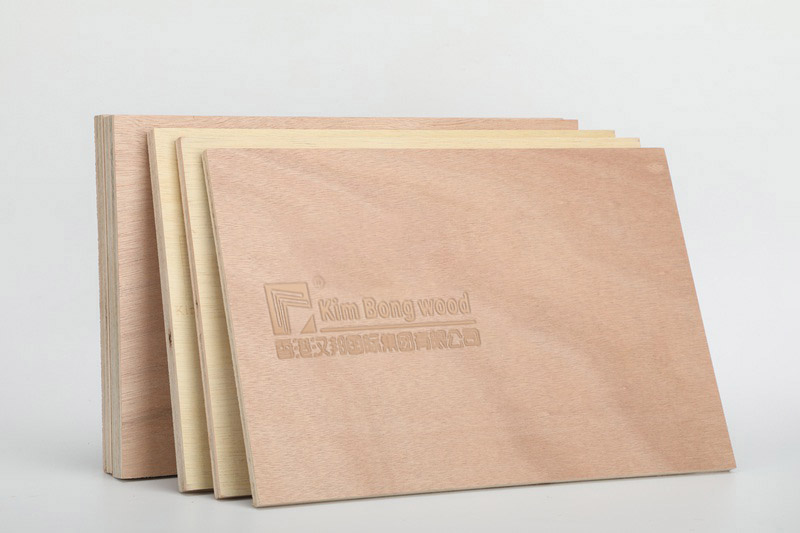
Understanding What “Furniture Board” Means
The term "furniture board" is broad and generally refers to engineered wood panels used in cabinetry, shelving, and interior structures. It can include several types of boards—multi-layer boards, MDF, plywood, particle board, and similar manufactured materials. In many regions, furniture board typically refers to higher-grade engineered panels made from cross-laminated veneers or compressed fibers designed to provide stability and consistent quality.
Unlike a single specific material, furniture board represents a category. Its purpose is to provide high-quality structural performance, a smooth surface, and resistance to common problems such as warping and cracking. Multi-layer Furniture Board, in particular, uses stacked veneers placed in alternating grain directions, forming a cross-laminated structure with long-term dimensional stability. KIM BONG WOOD’s multi-layer furniture board exemplifies this advanced manufacturing approach.
What Particle Board Is Made Of
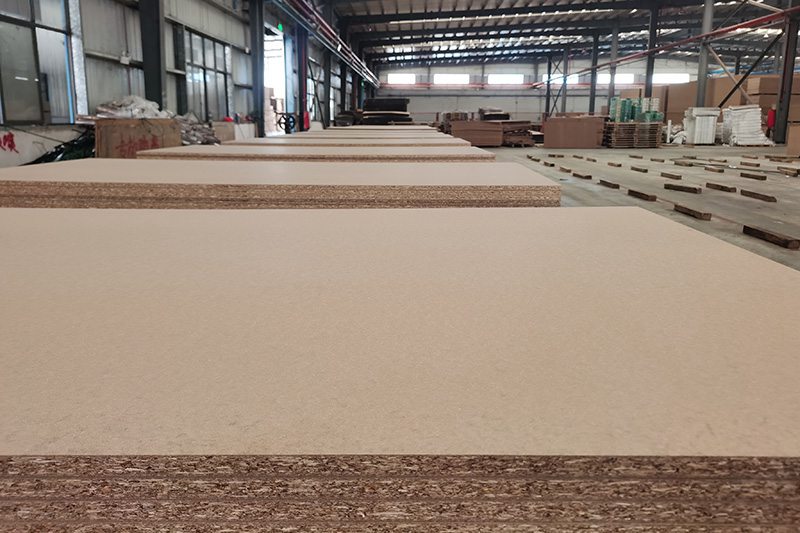
Particle board is a specific type of engineered wood panel made by compressing wood chips, sawdust, and small particles with resin binders. Its composition creates a uniform but lower-density core compared with multi-layer constructions. Particle board is widely used in cost-effective furniture, shelving, interior partitions, and laminate-covered components.
Its affordability and consistent surface make it an excellent substrate for laminates and melamine coatings. However, because the internal structure consists of loose wood particles, it does not provide the same strength, moisture resistance, or screw-holding capability as high-grade furniture board. KIM BONG WOOD’s particle board is manufactured with controlled density and eco-friendly adhesives to ensure stable quality for large-volume furniture production.
Core Differences Between Furniture Board and Particle Board
The two materials differ in both structure and performance. Below is a comparison table that highlights their characteristics clearly:
| Feature | Furniture Board (General / Multi-Layer) | Particle Board |
|---|---|---|
| Internal Structure | Cross-laminated veneers or compressed fibers | Wood chips and particles |
| Density | Medium to high | Low to medium |
| Strength | Excellent structural strength | Moderate |
| Moisture Resistance | Higher, especially in multi-layer boards | Low unless treated |
| Screw Holding | Strong | Weaker |
| Surface Smoothness | Very good, suitable for veneers | Smooth but less durable |
| Ideal Use | Cabinets, structural furniture, premium designs | Budget furniture, shelving, melamine panels |
This comparison shows why furniture board—particularly multi-layer board—is preferred in demanding furniture applications. Its layered construction improves stability and significantly extends product lifespan.
How the Internal Composition Affects Performance
The reason these materials behave differently lies in how they are formed. Multi-layer furniture board arranges natural veneers in alternating grain directions, distributing stress evenly through the panel. This design increases bending strength and reduces deformation.
Particle board, however, has a uniform but less compact internal structure. Wood particles are randomly oriented, which limits strength, especially at the edges and screw points. For heavy-use cabinets or furniture that must endure repeated mechanical stress, furniture board provides a more reliable structure.
Manufacturers like KIM BONG WOOD enhance performance further by using stable adhesives, advanced hot-pressing methods, and carefully selected veneers or wood particles, depending on the product type.
The Role of Adhesives and Binders
Both materials rely on adhesives, but the formulation influences quality:
Furniture boards often use stronger and lower-emission adhesives because the veneers must adhere under pressure and maintain alignment.
Particle boards use uniform resin distribution to bind particles together but require more resin content to achieve bond strength.
The adhesive type affects environmental safety classifications, resistance to moisture, and long-term durability. High-grade products from KIM BONG WOOD maintain low emissions while ensuring structural integrity.
When to Use Furniture Board
Furniture board is chosen when strength, stability, and durability are priorities. Examples include:
Kitchen cabinets exposed to humidity
Wardrobe systems requiring long-term shape retention
Shelving that carries heavy loads
Furniture frames that require dependable screw holding
High-end interior wall panels or built-ins
Because of its multi-layer structure, the board resists warping even when subjected to temperature and humidity changes. This reliability explains why multi-layer boards are preferred for premium custom furniture projects.
When Particle Board Is the Better Choice
Despite its lower strength, particle board offers several advantages:
Lower cost for budget furniture
Smooth surface ideal for melamine or laminate
Uniform density for large-scale mass production
Good acoustic insulation
Economical for temporary or light-duty applications
When used correctly and kept away from excessive moisture, particle board performs well and offers excellent value for manufacturers.
Visual and Mechanical Differences
Furniture board and particle board also differ in appearance and mechanical performance. Multi-layer furniture board often displays visible veneer layers on its edges, while particle board shows small wood fragments. These visual markers reflect the internal structure.
Mechanically, the differences include:
Impact resistance: Higher in furniture board because veneers absorb shock
Edge integrity: Furniture board edges resist crumble; particle board edges are softer
Thickness consistency: Both are consistent, but veneer layers add stiffness to furniture board
Fastener retention: Screws grip strongly in veneer layers, less so in particle cores
These factors help determine where each material should be used.
Environmental Considerations
Both engineered wood products help reduce waste by utilizing wood residues and maximizing the value of raw materials. However, multi-layer board typically uses veneers that come from controlled harvesting, while particle board uses recycled wood particles and by-products.
From an environmental standpoint:
Particle board promotes recycling of wood waste
Furniture board maximizes structural performance with minimal material use
Adhesive emissions vary by manufacturer
High-quality products offer E1 or E0 emission grades
KIM BONG WOOD prioritizes sustainability across both categories, ensuring that raw materials and adhesives meet modern environmental expectations.
Practical Decision Guide
A practical way to choose between furniture board and particle board is to consider the project’s mechanical and aesthetic requirements. The following simplified guide can help:
Choose furniture board if you need strong cabinets, long-lasting shelves, high-end furniture, or moisture-resistant components.
Choose particle board for cost-effective furniture, melamine-covered panels, decorative surfaces, or low-load interior applications.
For applications where long-term performance matters—such as kitchen cabinetry, office furniture, or built-in storage—multi-layer furniture board provides significantly better structural benefits.
Summary Table: Best Applications for Each Material
| Application Type | Best Material | Reason |
|---|---|---|
| Kitchen cabinets | Multi-layer furniture board | Humidity stability and strength |
| Low-cost shelving | Particle board | Affordable and easy to laminate |
| Heavy-load furniture | Furniture board | Strong screw holding and compressive strength |
| Temporary or decorative panels | Particle board | Economical and smooth surface |
| Premium furniture frames | Multi-layer furniture board | High durability and longevity |
This matrix highlights how different structural needs influence material selection.
Conclusion
Furniture board and particle board are not the same. Furniture board—especially multi-layer construction—offers superior stability, strength, screw-holding capacity, and moisture resistance. Particle board, on the other hand, is a cost-effective material suitable for lightweight and decorative applications. By understanding their differences, manufacturers and consumers can make informed choices that match their performance expectations.
For projects requiring excellent durability and structural integrity, KIM BONG WOOD Multi-Layer Furniture Board provides an ideal solution. For budget-friendly applications or laminated surfaces, KIM BONG WOOD Particle Board offers consistent quality and reliable processing performance. Selecting the right material ensures longevity, functional stability, and overall value in furniture manufacturing and interior design.