

Standard Guidelines for Flame-Retardant Panels for Engineering Applications
flame-retardant panels are widely specified in engineering projects where fire safety, structural stability, and compliance documentation must be controlled as carefully as cost and lead time. In commercial interiors, public buildings, transportation-related facilities, hotels, schools, and industrial fit-outs, the panel is not just a decorative substrate. It is a risk-management material that must perform consistently under installation stress, service humidity, and long-term aging.
This guide explains practical, standards-oriented guidelines for selecting and verifying flame-retardant panels for engineering use. It focuses on what project owners, contractors, and procurement teams should check, how to interpret test reports, and which manufacturing controls matter for long-term reliability. KIM BONG WOOD provides engineered panel solutions, including flame-retardant boards, with stable production and compliance support. You can view our panel range here: KIM BONG WOOD products.
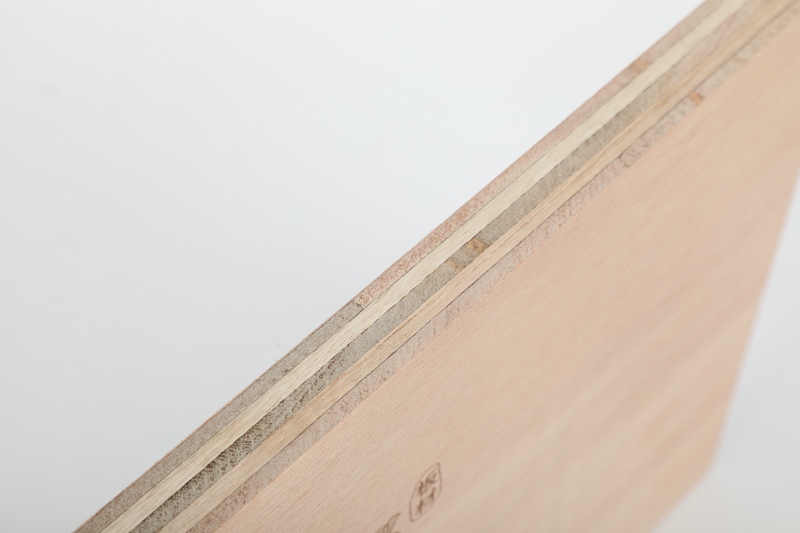
1. Define “Engineering Application” Requirements Before You Compare Panels
Engineering procurement should begin with project conditions, not product names. “Flame-retardant board” can mean different constructions, treatment methods, and performance classes. If the project does not define its use scenario clearly, buyers risk selecting panels that pass a basic test but fail in real installation or service.
Start by documenting the following engineering requirements in your specification:
The installation location and exposure conditions, including humidity, temperature variation, and cleaning frequency
The function of the panel, including wall cladding, cabinetry, partitions, doors, ceiling backing, or furniture structures
The surface finishing method, including direct use, lamination, paint system, or melamine overlay
The expected service life, maintenance plan, and replacement difficulty
The fire safety scope, including whether the panel is used in escape routes, public areas, or high-occupancy spaces
When these conditions are clear, you can evaluate flame-retardant panels based on performance evidence rather than marketing descriptions.
2. Understand What “Flame-Retardant” Should Mean in Standards Terms
A flame-retardant panel should demonstrate measurable improvement in fire behavior compared with standard panels. In engineering practice, this is verified through recognized testing and classification systems, which differ by market and project type.
Common reference frameworks that buyers may encounter include:
European fire classification systems that assign reaction-to-fire classes
North American approaches that use surface burning characteristics and room-corner performance methods
Regional building codes that define acceptable products for specific building types and routes of egress
Instead of relying on a verbal claim such as “fireproof” or “Class A,” the engineering approach is to request:
The exact test method name and test laboratory identity
The classification result and the scope of the tested sample
The product construction details used in the test, including thickness, density, and surface condition
If the supplier cannot provide a test report that matches your intended market and installation method, the material may introduce approval risk during inspection or project handover.
3. Engineering Quality Is More Than Fire Performance
Fire behavior is a critical requirement, but engineering failures often happen due to mechanical and environmental issues that appear during installation or after occupancy. Flame-retardant panels should be evaluated as full engineering materials, not only as fire-rated materials.
Key engineering performance indicators include:
Bonding stability and delamination resistance
Panels must remain intact during cutting, drilling, and fastening. In service, they must resist layer separation under humidity and temperature changes. Good bonding control improves long-term safety and reduces rework.Nail-holding and screw-holding strength
Many engineering installations rely on edge fastening. Poor holding strength leads to loose joints, hardware failure, and unsafe installations, especially in cabinetry, partitions, and wall systems.Dimensional stability and flatness
Warping and twist create visible gaps, uneven joints, and difficult alignment. For large projects, inconsistent flatness increases labor time and increases rejection rates during inspection.Aging resistance and chemical stability
Flame-retardant panels for public and commercial spaces often face cleaning chemicals, periodic maintenance, and long service cycles. A reliable panel should maintain performance and appearance without premature degradation.
In KIM BONG WOOD flame-retardant panels, the engineering value is designed around safety performance plus stability. Product positioning emphasizes improved safety, chemical stability, and resistance to aging, so the panel remains reliable after installation rather than only on the day it is delivered.
4. Confirm the Construction and Treatment Approach
Flame-retardant performance can be achieved through different methods. From a procurement standpoint, the method matters because it affects machining, finishing compatibility, moisture behavior, and long-term stability.
When evaluating a panel, confirm these points in writing:
Whether the flame-retardant effect is achieved through core treatment, adhesive formulation, surface overlay, or a combined approach
Whether the treatment is designed for the full thickness or mainly the surface region
Whether the panel requires specific edge sealing, finishing systems, or installation spacing rules to maintain performance
Whether the panel performance changes with thickness selection
For project consistency, the safest approach is to select a supplier that can deliver multiple thickness options with controlled construction and stable output. KIM BONG WOOD provides common engineering thickness choices including 5 mm, 9 mm, 12 mm, 15 mm, and 18 mm, allowing spec alignment across different installation zones without changing suppliers or construction logic.
5. Documentation Checklist for Engineering Procurement and Inspection
Engineering projects are audited through documentation. Even if a panel performs well, missing paperwork can delay approval and handover. A professional supplier should be prepared to support documentation workflows.
Request the following documentation set for flame-retardant panels:
Fire test report aligned with your market’s required method and classification format
Product specification sheet that lists thickness, construction, and intended use
Quality management evidence that supports batch stability
Environmental compliance documentation if the project has indoor air requirements
Packaging, labeling, and traceability rules for warehouse control and site delivery
KIM BONG WOOD supports engineering buyers with standardized order parameters and supply rules, including OEM and ODM availability, customized logo acceptance for project identification, and controlled shipment planning by sea or land when required.
6. Practical Selection Guidelines for Thickness, Application, and Safety Margin
Thickness selection is not only structural. It can also influence fire behavior, fastening performance, and surface finish reliability. Engineering buyers should match thickness to both load conditions and installation type.
A practical guideline is:
Use thinner panels for decorative layers, backing layers, or non-structural coverings where fasteners are not heavily loaded
Use mid-range thickness for partitions, cabinetry bodies, and areas that require stable screw holding
Use thicker panels for longer spans, heavier load areas, frequent-use cabinetry, and zones with higher mechanical stress
For large engineering projects, standardizing thickness options across the project reduces procurement risk and simplifies installation training. KIM BONG WOOD’s thickness range allows a consistent specification system without mixing unrelated suppliers and constructions.
7. Supplier Capability Matters in Engineering Outcomes
Engineering buyers should evaluate supplier capability as part of the panel specification. Many project problems are not material problems. They are consistency problems, delivery problems, and response problems.
A capable engineering supplier should demonstrate:
Stable quality output across batches, not only a single sample
Clear MOQ and lead-time rules for procurement planning
Packaging that reduces transportation damage and keeps panels flat
Rapid technical response for installation and finishing questions
Quality management certifications that support process control
KIM BONG WOOD supports engineering supply planning with a clear MOQ of 1000 pieces for standardized ordering, and uses protective shipment planning with packaging designed for transport stability. The company also maintains recognized quality management certification systems, supporting procurement confidence for long-cycle projects.
8. A Procurement Table You Can Use for On-Site Evaluation
The table below can be used by procurement teams, QC inspectors, and contractors during supplier comparison and incoming inspection.
| Engineering Requirement | What to Verify | Why It Matters in Projects |
|---|---|---|
| Fire compliance | Test method, classification, lab identity, scope of sample | Prevents approval delays and re-testing costs |
| Structural bonding | No delamination during cutting and drilling | Avoids rework, improves long-term integrity |
| Screw holding | Edge fastening behavior and repeat tightening stability | Protects cabinetry, partitions, and hardware safety |
| Flatness and thickness | Measured thickness consistency and minimal warp | Reduces installation labor and alignment issues |
| Aging resistance | Performance stability under cleaning and humidity cycles | Prevents early failure and complaint risk |
| Environmental compliance | Odor control and required labels for indoor projects | Supports occupancy acceptance and buyer confidence |
| Supply stability | MOQ, packaging, logistics, traceability | Keeps schedule stable and reduces site disruption |
Conclusion
Flame-retardant panels for engineering applications should be selected through standards evidence, installation compatibility, and long-term stability, not only through a single fire claim. A reliable panel must combine verified fire behavior with strong bonding, stable screw holding, controlled thickness, and aging resistance that supports years of service in commercial environments.
KIM BONG WOOD provides engineered panel solutions designed for project procurement reality, including flame-retardant boards with stable specifications, multiple thickness options, OEM and ODM support, and documented quality management. To review available options and request project alignment support, visit KIM BONG WOOD products.