

How To Fix Particle Board?
Particle Board is widely used in furniture and interior construction because it is cost-efficient, flat, and easy to process at scale. When damage happens, the right repair method depends on the failure type. A loose screw hole, a chipped edge, and a swollen panel from water exposure are not the same problem, and they should not be fixed with the same materials. The goal of a good repair is to restore strength where needed, rebuild a stable surface for finishing, and prevent repeat failure caused by moisture entry or weak fastener holding zones.
At KIM BONG WOOD, we help customers reduce repair frequency by selecting the right particle board specification for the application and by providing stable quality panels that machine and assemble predictably. For product options and technical specifications, refer to: Particle Board
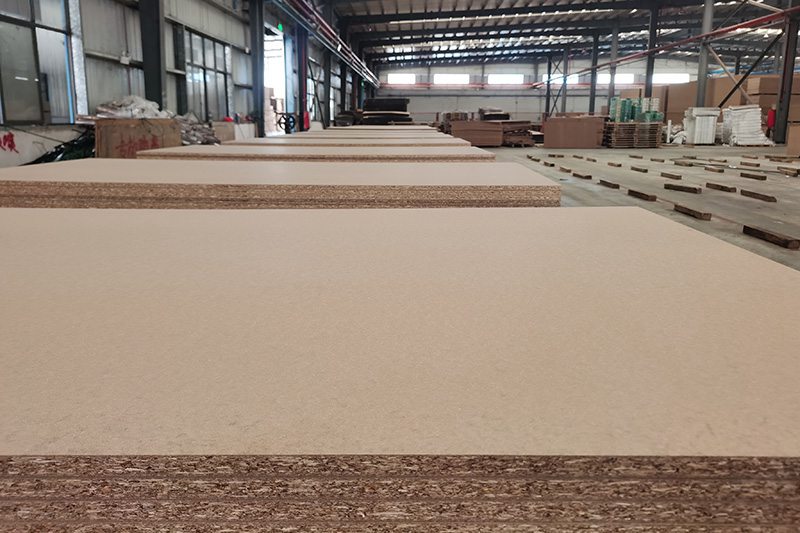
Common particle board Damage Types And Why They Happen
Particle board fails in recognizable patterns because it is made of wood particles bonded with resin. The core is strong in compression and flatness, but vulnerable where moisture enters or where fasteners are repeatedly loaded.
Typical damage types include screw holding failure, often seen as stripped or enlarged holes in hinge zones and handle areas. Edge chipping happens during transport, cutting, or installation when edges are not protected or when impact loads concentrate at corners. Surface dents and crushed zones appear under point loads or over-tightened hardware. Moisture swelling is one of the most critical issues, because once the board expands and loses density, strength is difficult to fully restore.
Correct diagnosis matters because some repairs are structural and some are cosmetic. A cosmetic repair should not be used where fasteners carry repeated load.
Fixing Loose Screw Holes And Weak Fastener Zones
Loose screw holes are one of the most common repair requests in particle board furniture and cabinetry. The core can lose holding strength when screws are over-tightened, removed and reinstalled multiple times, or loaded by hinges.
Reliable repair approaches include:
Filling the hole with a high-strength wood filler or epoxy-based filler, allowing full cure, then re-drilling a pilot hole to restore controlled screw engagement
Installing a dowel or insert into the damaged zone using a strong adhesive, then re-drilling for the correct screw size
Upgrading to threaded inserts or connector fittings in high-load zones so the load is distributed more reliably than a direct screw bite into the core
For hinge and hardware areas, the most durable result often comes from reinforcement rather than simply refilling. If the load will repeat daily, the repair should upgrade the joint design to avoid a second failure.
Fastener repair selection guide
| Damage Situation | Best Repair Direction | Why It Works |
|---|---|---|
| Slightly enlarged screw hole | High-strength filler and re-drill | Restores bite and alignment |
| Severely stripped hole | Dowel or insert reinforcement | Creates new holding material |
| High-load hinge zone | Threaded insert system | Improves long-term durability |
| Edge-adjacent hole failure | Reinforced block or bracket | Prevents edge breakout |
Repairing Chips, Dents, And Surface Defects For Refinishing
Chips and dents are often repairable when the goal is a smooth surface for paint, laminate, or edge banding. The key is to rebuild the damaged geometry and seal porous zones so the repair does not absorb finish unevenly.
A stable surface repair workflow typically includes:
Removing loose particles and cleaning the damaged zone so fillers can bond
Rebuilding the shape using a suitable filler, then sanding flush after full cure
Sealing the repaired area to reduce porosity before painting or laminating
Reapplying edge banding or overlay film where required to restore edge durability
If the panel is melamine-faced or laminated, surface repair usually requires a color-matched repair compound rather than standard filler, because the surrounding surface is sealed and glossy. The repair objective is visual blending and surface continuity, not deep penetration.
Fixing Swollen Particle Board From Water Exposure
Water swelling is the most difficult particle board issue to fix, because swelling changes internal density and weakens the core. Some panels can be stabilized for non-structural use, but severe swelling often requires replacement if load-bearing or long service life is required.
Practical mitigation steps:
Dry the panel fully using airflow and time before attempting any repair, because working on a wet core locks moisture in
Remove loose or raised fibers, then rebuild the surface with filler and sanding if the goal is cosmetic refinishing
Seal exposed edges and repaired zones to prevent future moisture entry
Avoid reusing swollen panels in hinge, fastener, or load-bearing locations
If swelling is limited to small edge zones, trimming and re-edging can restore usability in some cases. If swelling extends through the panel thickness, replacing the panel is often the most reliable solution in commercial-quality builds.
Specification Choices That Reduce Repair Frequency In Production
Many particle board repairs can be prevented through correct specification. For production and installation programs, the repair rate is closely tied to how the board is selected and how edges and fastening zones are designed.
Key prevention levers:
Select particle board with stable density and internal bond performance for hardware-heavy furniture
Use edge banding and proper sealing to reduce moisture entry at vulnerable edges
Specify connector fittings, inserts, and reinforcement blocks for repeated-load hardware zones
Plan packaging protection and handling methods that reduce edge impact during transit
Use surface formats such as melamine-faced or laminated panels when easy-clean durability is required
For OEM/ODM programs, reducing field repairs often depends on standardizing fastening methods and edge protection rather than changing only the panel thickness.
For product options and technical specifications, refer to: Particle Board
Conclusion
Fixing particle board starts with identifying the damage type. Loose screw holes require reinforcement and re-drilling for reliable holding strength. Chips and dents can be rebuilt with fillers and sealing to restore a finish-ready surface. Water-swollen particle board is the hardest to repair, and severe swelling often needs replacement for long-term durability. In large production and installation programs, the most cost-effective strategy is preventing repeat failures through correct board specification, edge protection, and hardware zone design.
If you are sourcing particle board for furniture, cabinetry, or interior panel programs and need stable specifications that reduce repair rates, KIM BONG WOOD can support customized sizes, consistent supply, and finish-oriented panel selection. Share your application, surface type, thickness requirements, and expected load conditions, and we will recommend suitable particle board options and provide a quotation for your inquiry.
Previous: How To Repair Particle Board Furniture?