

How To Repair Particle Board Furniture?
Particle Board furniture is widely used in residential and commercial interiors because it is flat, cost-efficient, and easy to process into repeatable components. When damage occurs, repairs succeed only when the repair method matches the failure type. A loose hinge screw, a crushed corner, and a water-swollen panel are different problems with different structural risks. The goal is not only to make the furniture look better, but to restore fastening reliability, surface integrity, and long-term stability so the same defect does not return.
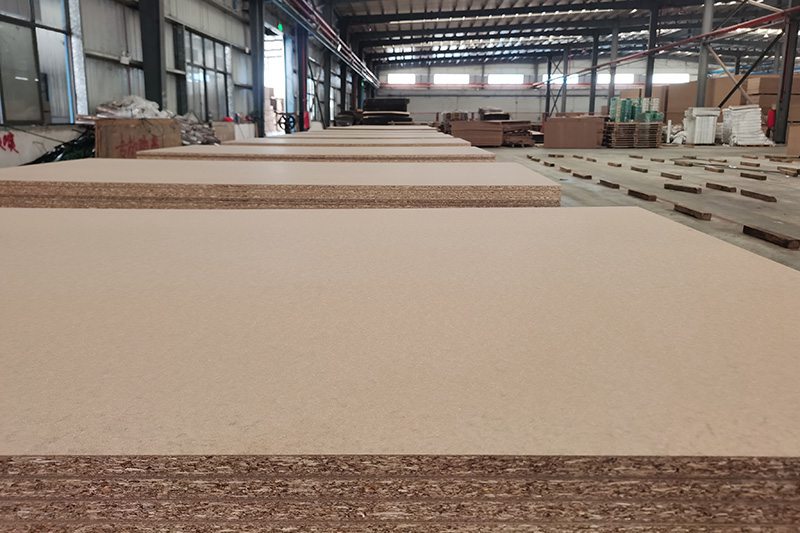
Diagnosing particle board Furniture Damage Before Repair
Effective repairs start with a fast and accurate diagnosis. particle board is made from wood particles bonded with resin, so damage patterns are predictable. If the repair only treats the visible symptom, the structure may remain weak and fail again after a short service period.
Most furniture damage falls into four categories. The first is fastener failure, typically seen at hinge plates, drawer runners, handle screws, and connector fittings. The hole becomes enlarged or stripped, and screws no longer hold. The second is edge or corner damage from impact during handling, where the board chips and exposes a porous core that absorbs moisture and loses strength. The third is surface damage such as dents, scratches, and laminate chips, which is often cosmetic but can become structural if the core is exposed. The fourth is moisture swelling, the most serious type, where water expands the board, reduces density, and creates permanent thickness changes.
A simple diagnostic rule is to confirm whether the damaged zone must carry load. If the area supports hinges, drawer runners, or frequent pulling force, the repair must rebuild mechanical strength, not only appearance.
Repairing Loose Screws, Hinges, And Hardware Mounts
Loose hinges and stripped screw holes are the most common particle board furniture failures because these zones carry repeated loads. Repairing them requires creating a new, strong holding medium inside the panel, not only refilling the void.
For minor stripping where the hole is only slightly enlarged, a high-strength filler or epoxy-based repair compound can be packed tightly into the hole, allowed to cure completely, then re-drilled with an appropriate pilot hole. This restores controlled screw engagement rather than allowing the screw to crush the softened core. For severe stripping, dowel reinforcement is more reliable. The damaged hole is cleaned and sized to accept a hardwood dowel or reinforcement plug bonded with adhesive. After curing, the dowel becomes the new fastener-holding zone, and the hardware can be remounted with proper pilot holes.
In repeated-load applications, threaded inserts or connector upgrades often outperform direct screws into the panel. This is especially important for hinge plates and drawer slides where alignment must remain stable. Reinforcement also helps when the damaged hole sits close to an edge, because particle board edge zones are more vulnerable to breakout under load.
Hardware repair method selection
| Failure Situation | Repair Method | Best Use Case |
|---|---|---|
| Slightly loose screw | Filler and re-drill pilot hole | Light-load hardware and quick fixes |
| Stripped hinge screw hole | Dowel reinforcement and re-drill | Hinges and repeated opening cycles |
| Drawer slide mount failure | Insert system or reinforced block | High-load sliding hardware |
| Edge-adjacent hole damage | Reinforcement plug plus bracket support | Prevents edge cracking and repeat failure |
A reliable hardware repair always ends with a controlled pilot hole and correct screw length. Over-tightening is a frequent root cause, and repair will fail again if screws are driven without torque control.
Fixing Chips, Corners, And Surface Damage For A Finish-Ready Result
Edge and corner repairs focus on rebuilding geometry, sealing the porous core, and restoring a surface that can accept paint, laminate patching, or edge banding. If porous core is left exposed, it will absorb moisture and weaken quickly, even in indoor environments.
The repair workflow starts by removing loose particles and undercut fragments so the repair compound can bond to stable material. The damaged zone is then rebuilt with an appropriate filler that can be sanded and shaped without crumbling. After curing, sanding should restore the original edge line and corner radius. Sealing is the critical step. A sealed repair area prevents uneven absorption and improves adhesion for coatings or edge banding.
For melamine-faced or laminated furniture, the surface is sealed and smooth, so repairs must focus on matching surface continuity. A cosmetic patch is usually more effective than attempting to stain the exposed core. In production environments, the most stable approach is often to reapply edge banding and replace heavily damaged panels rather than overworking a compromised edge.
Surface and edge repair priorities:
Restore sharp geometry for cabinet doors and visible panels
Seal repaired zones to prevent moisture entry
Rebuild a stable base before applying any decorative finish
Reinforce edges if the panel is in a high-impact location such as kick zones or transport-exposed areas
Addressing Water Swelling And Preventing Repeat Damage
Water swelling is the hardest particle board furniture issue to repair because swelling changes the panel’s internal structure. Once a panel has expanded, it does not return fully to its original thickness, and the core density may be permanently reduced. The first step is always drying, because repairs on wet particle board trap moisture and accelerate future breakdown.
After the panel is fully dry, the feasibility of repair depends on the swelling severity and location. Localized swelling at a non-structural edge can sometimes be stabilized by trimming, sanding raised fibers, rebuilding the surface with filler, and sealing the edge thoroughly. However, swelling in hinge zones, drawer mounts, or load-bearing shelves often leads to recurring failure because fasteners cannot regain reliable holding strength.
Prevention is often more cost-effective than repair. Moisture typically enters through exposed edges, unsealed cutouts, sink-adjacent cabinet zones, and damaged laminate corners. Sealing edges, maintaining intact edge banding, and using protective liners in high-risk areas significantly reduces swelling incidence.
For furniture programs targeting long service life, moisture risk should be addressed during material selection and design, including choosing suitable surface formats and edge protection solutions.
Conclusion
Repairing particle board furniture is most successful when the repair method matches the damage type. Stripped screw holes and loose hinges require reinforcement and controlled re-drilling to restore mechanical strength. Chips and corner damage need geometry rebuilding plus sealing to protect the porous core. Water-swollen areas are the most difficult to recover, and severe swelling in structural or hardware zones often requires panel replacement to ensure long-term reliability. For large furniture programs, the best results come from combining repair methods with prevention strategies such as edge protection, hardware reinforcement, and moisture control.
If you are sourcing particle board for furniture manufacturing, cabinetry programs, or replacement panel supply and need stable quality, customized sizing, and consistent specifications for production efficiency, send us your target thickness, surface type, and application requirements. We will recommend suitable particle board options and provide a quotation for your inquiry.
Previous: What Plywood To Use For Furniture?